
The Future of Connectivity in India: Trends for 2026 and Beyond
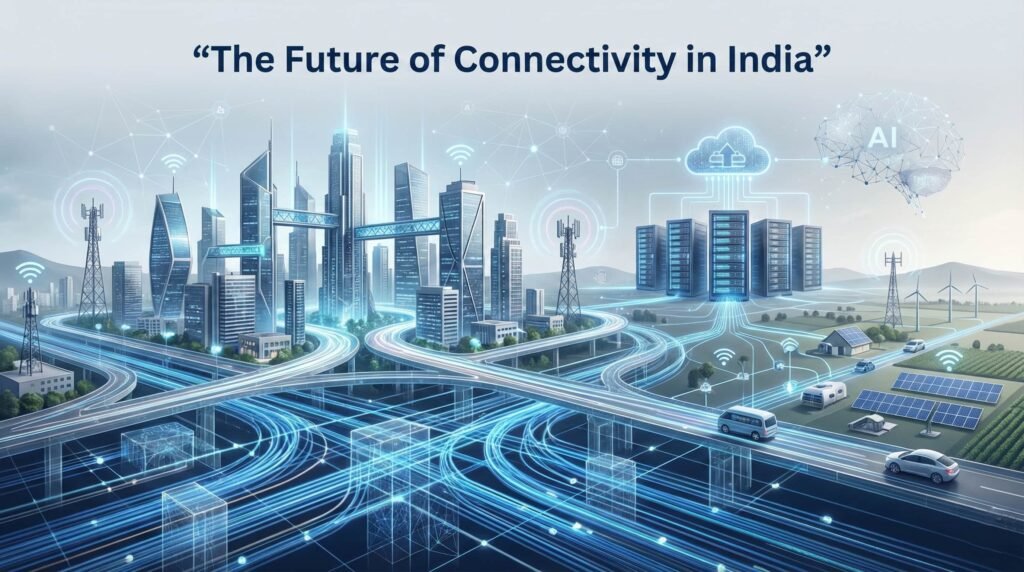
India’s digital landscape is evolving rapidly, driven by increased internet penetration, smart infrastructure initiatives, and enterprise digitization. As businesses and governments embrace digital transformation, connectivity is becoming the backbone of economic growth.
The Rise of Fiber-First Infrastructure
Fiber-optic networks are replacing traditional copper and wireless systems due to their high capacity, low latency, and future scalability.
Expansion of Smart Cities and Smart Villages
Urban and rural development initiatives are integrating digital infrastructure such as surveillance systems, IoT devices, and city-wide connectivity.
Growth of Cloud-Centric Enterprises
Businesses are increasingly adopting cloud platforms, making high-speed, reliable internet essential for operations.
Increased Demand for Dedicated Connectivity
As reliance on real-time applications grows, enterprises are shifting from shared broadband to dedicated leased lines.
Role of 5G and Edge Computing
5G will complement fiber networks by enabling ultra-low latency applications, while edge computing will bring data processing closer to users.
Sustainability and Green Networks
Energy-efficient infrastructure and underground fiber deployments will play a key role in reducing environmental impact.
Cybersecurity as a Connectivity Priority
Secure network architecture will become central to enterprise internet strategies.
Connectivity for Remote Work and Digital Inclusion
Hybrid work models and rural connectivity will drive demand for reliable internet across regions.
AI-Driven Network Management
Artificial intelligence will enable predictive maintenance, performance optimization, and faster fault resolution.
Conclusion
The future of connectivity in India is fiber-driven, intelligent, and enterprise-focused. Businesses that invest in robust internet infrastructure today will be better positioned to compete, scale, and innovate in the years ahead.